
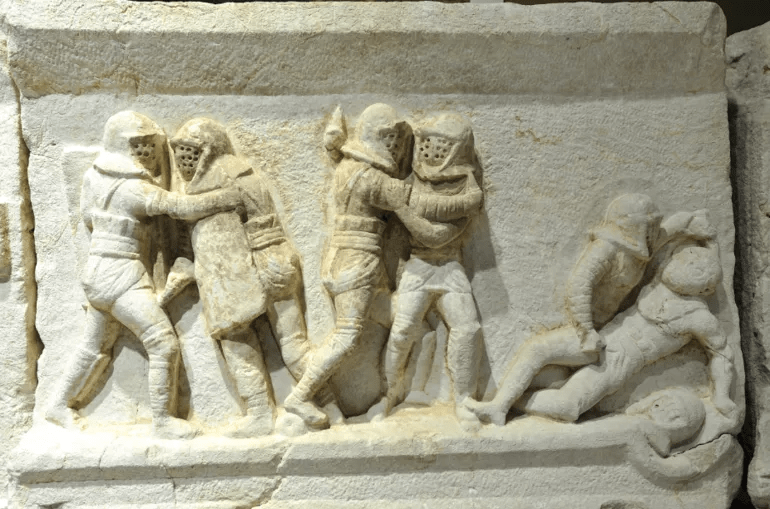
Gölhisar Cinayet Mahallesi’ndeki Kibera antik kenti, “Gladyatörler Şehri” olarak bilinir ve bir zamanlar Lidya ve Roma uygarlığının en önemli şehirlerinden biriydi. Ardıç ve sedir ormanlarının kapladığı 1100-1300 metre yükseklikte yer alan 2300 yıllık şehir, çevresinin manzarasını sunan tepelerin üzerinde olduğu için her yerinden görülebiliyor.
The ancient city of Kibyra, in the Gölhisar district of Burdur, is known as “the City of Gladiators” and once was one of the most important cities in Lydian and Roman civilization. Located at an altitude of 1100-1300 meters with juniper and cedar forests covering it, the 2300 year old city can be seen from all parts because it’s on hilltops that offer a view over its surroundings.
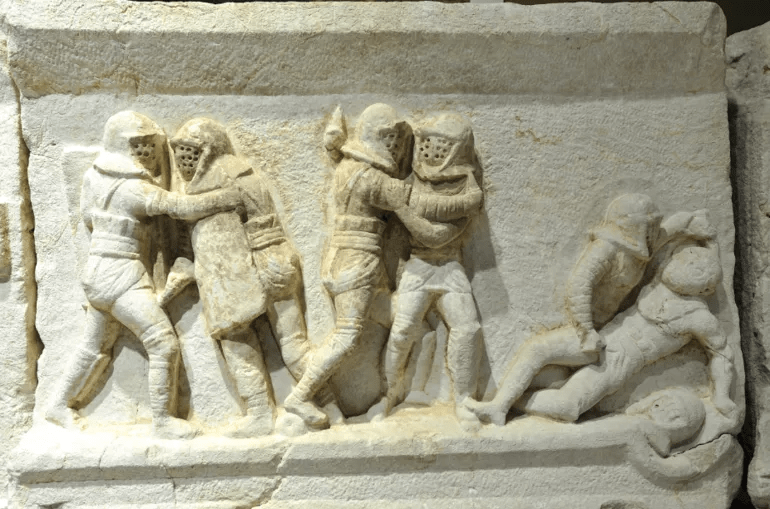
Amasyalı gezgin Strabon’un kayıtlarına göre Kibyra halkı aslen Lidyalıydı ve buradan Kabalis bölgesine göç etti. Kısa süre sonra yerleşim alanlarını değiştirdiler ve çevresi 100 stadyum olan bir şehir kurdular. Bu şehrin arkeolojik anıtları ve kaynakları 2006 yılında kazılarak 30 binden fazla piyade ve 2.000’den fazla süvari birliği ile militarist bir karakter ortaya çıkarıldı. Burası, Türkiye’de antik çağlardan kalma en büyük gladyatör kabartmalarına sahip yerdir.
According to the records of the Amasian traveler Strabo, the people of Kibyra were originally Lydians and migrated from here to the Kabalis region. Soon they changed their settlement areas and established a city with a circumference of 100 stadiums. The archaeological monuments and resources of this city were excavated in 2006, revealing a militaristic character with over 30 thousand infantry and more than 2,000 cavalry units. This is the place with the largest gladiator reliefs from ancient times in Turkey.
Şehrin stratejik konumu onu bölgesel bir adalet merkezi haline getirdi ve eski zamanlarda bir at yetiştirme kasabası olarak ünlenmesi, ona basitçe “Hızlı Koşan Atlar Şehri” denmesine yol açtı. Kent en güçlü dönemini Roma döneminde geçirmiştir ve bugün görülebilen tüm mimari kalıntılar Roma Dönemine aittir.
The strategic location of the city made it a regional center for justice, and its fame as a horse breeding town in ancient times has led to it being called simply “The City of Fast-Running Horses”. The city had its strongest time in the Roman period, and all the architectural remains that can be seen today belong to the Roman Period.
MS 23’te şehri büyük bir deprem vurduktan sonra, İmparator Tiberius (14-37 arasında hüküm sürdü) 5 yıl af ve mali yardım getirdi. Kibera halkı, cömertliğinin onuruna isimlerini Kaesarea Kibyra olarak değiştirmeyi kabul etti. .
After a great earthquake struck the city in 23 CE, Emperor Tiberius (ruled 14-37) brought amnesty and financial aid for 5 years. The people of Kibyran agreed to change their name to Kaesarea Kibyra in honor of his generosity. .
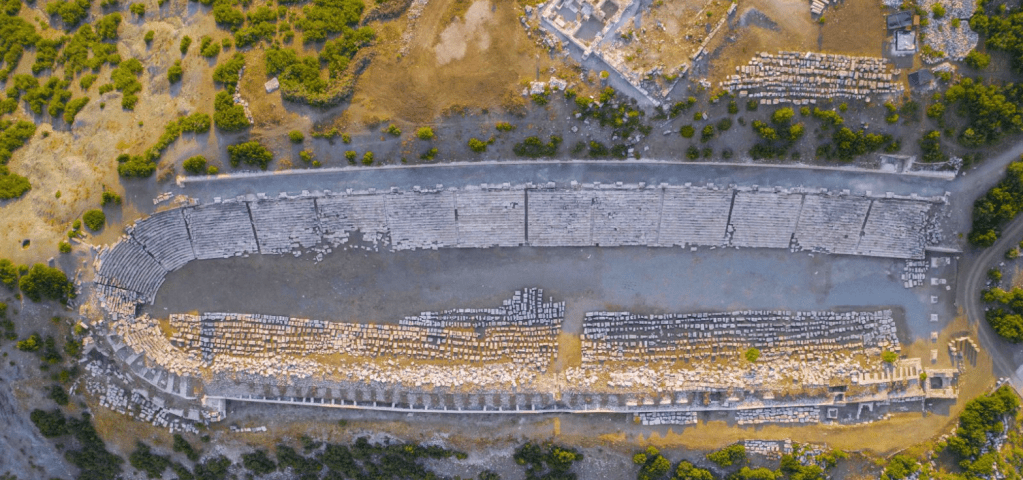
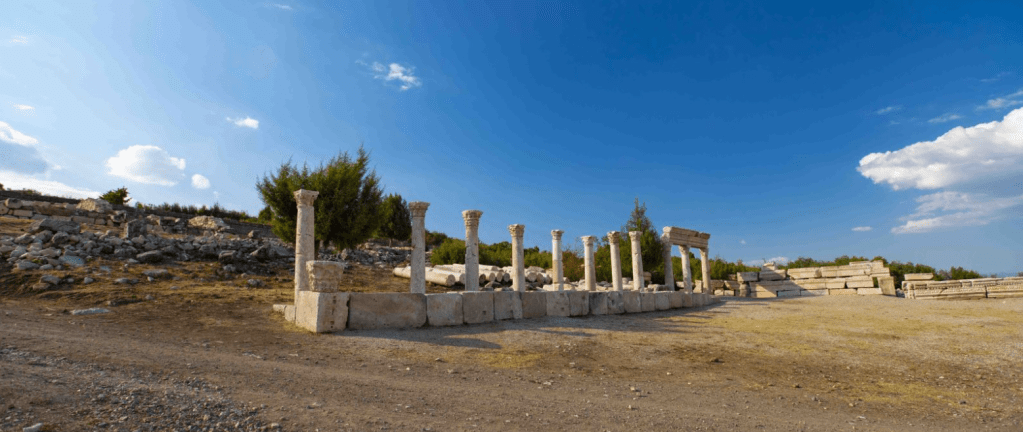
Kentin yerleşim alanı oldukça büyüktür. Yapılar, simetrik düzenlenmiş, tepelik teraslanarak göl ve ova manzarasına hâkim konumda ve hiçbir yapı bir diğerinin manzarasını kesmeyecek biçimde yerleştirilmiştir. Şehre girerken solda muhteşem bir anıtsal kapı ile Antik Çağ Anadolu’sunun 12-13 bin kişi kapasitesi ile en görkemli stadyumu bulunmaktadır.
The residential area of the city is quite large. The buildings are symmetrically arranged, terraced on a hill and in a position that dominates the lake and lowland landscape, and no structure is placed in such a way that it does not interrupt the view of another. When entering the city, there is the most magnificent stadium of Ancient Anatolia with a magnificent monumental gate on the left and a capacity of 12-13 thousand people.
Kibyra Stadyumu / Kibyra Stadium
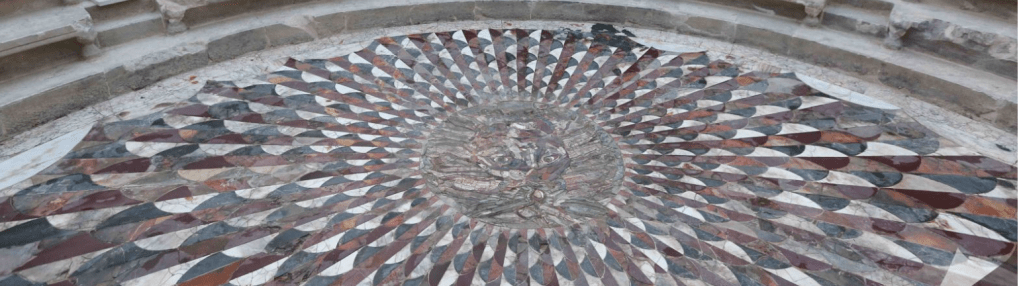
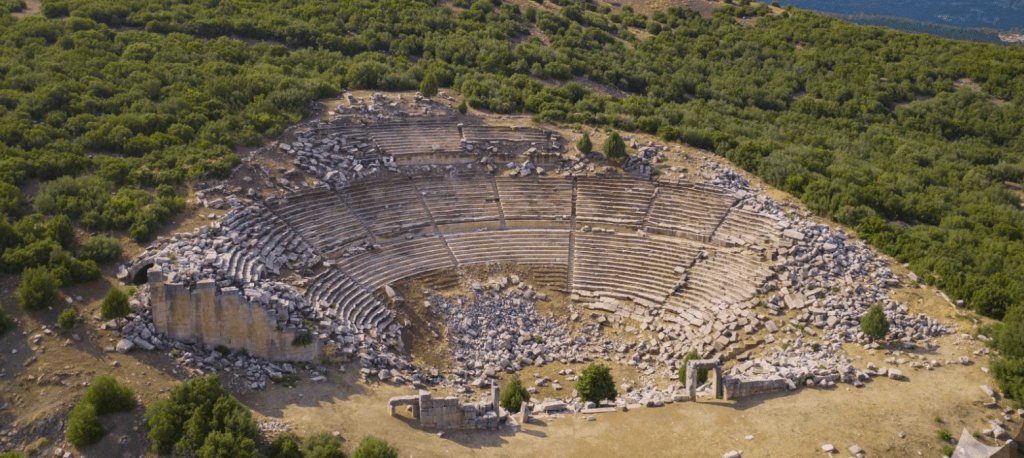
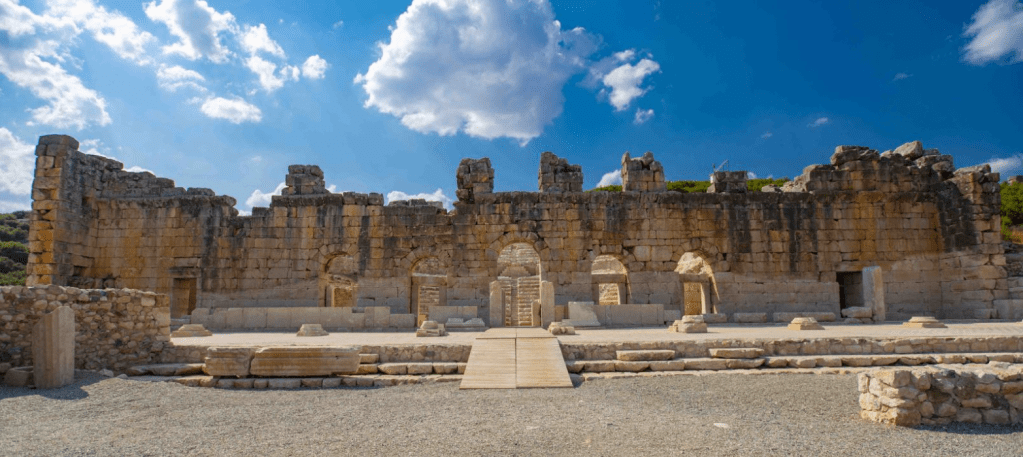
İlerledikçe bazilika, yukarı ve aşağı agora, hamam, gymnasion, tiyatro ve meclis binası ile planlı anıt mezar, hamam, yuvarlak kuleli tak ve su yolları görülmektedir. Meclis binası/müzik evi 3 bin 600 kişi kapasitesiyle Antik Çağ Anadolu’sunun en görkemli eserlerindendir. Meclis binası/orkestranın tam merkezinde bulunan kırmızı, yeşil ve beyaz mermerden yapılmış, yılanlardan oluşan saçları ve insanları taşa çeviren bakışlarıyla Medusa Mozaiği Anadolu’da tektir.
As you progress, you can see the basilica, upper and lower agora, bathhouse, gymnasium, theater and parliament building, as well as the planned mausoleum, bathhouse, round tower tak and waterways. The parliament building / music house is one of the most magnificent monuments of Ancient Anatolia with a capacity of 3 thousand 600 people. The Medusa Mosaic, made of red, green and white marble, located right in the center of the parliament building/ orchestra, is unique in Anatolia with its hair made of snakes and its gaze that turns people to stone.
Meclis binası/müzik evi / The parliament building / music house
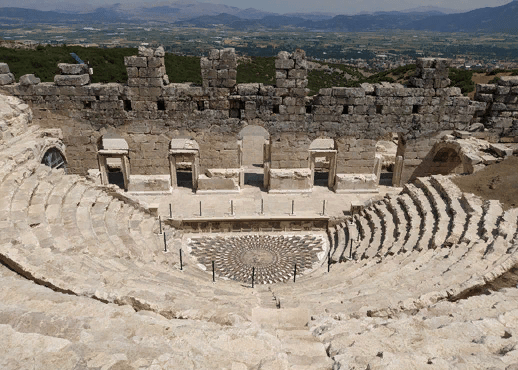
Medusa Mozaiği / Medusa Mosaic
Yine meclis binası önünde, Geç Roma Dönemi’ne ait (MS 6-7’nci yüzyıl) Roma Hamamı ve seramik atölyesi bulunmuştur. Kentin bugün görülebilen tüm mimari kalıntıları Roma İmparatorluk Dönemi’ne aittir.
Again, a Roman bath and a ceramic workshop belonging to the Late Roman Period (6th-7th century AD) were found in front of the parliament building. All the architectural remains of the city that can be seen today belong to the Roman Imperial Period.
Kibyra, II. Eumenes (MÖ 197-159) zamanında Bergama Krallığı egemenliğinde görünmektedir. Hemen sonrasında Kibyra ve yakın çevresinde konumlanmış antik kentlerden Boubon, Balboura ve Oinoanda’dan teşekkül dörtlü ortak meclis (MÖ 2-1’nci yüzyılda) oluşturulmuştur.
Kibyra, II. During the time of Eumenes (197-159 BC), the Kingdom of Pergamum seems to have been under its rule. Immediately after, a quadruple joint assembly (in the 2nd-1st century BC) was formed consisting of Boubon, Balboura and Oinoanda, ancient cities located in Kibyra and its immediate vicinity.
Kibyra Tiyatrosu / Kibyra Theatre
Söz konusu birlik MÖ 82 yılında Romalı General Murena tarafından dağıtılarak ortadan kaldırılmış; Asia eyaleti ve diğer kentler Likya Birliği’ne dâhil edilmiştir. MS 23 yılında meydana gelen büyük bir deprem sonucunda yerle bir olan kent, Roma İmparatoru Tiberius tarafından yeniden inşa edilmiştir. Kibyra özellikle MS 1 ve 3’üncü yüzyıllar arasında en parlak dönemini yaşamıştır.
The union in question was dissolved and eliminated by the Roman General Murena in 82 BC; the province of Asia and other cities were included in the Lycian Union. The city, which was destroyed as a result of a major earthquake that occurred in 23 AD, was rebuilt by the Roman Emperor Tiberius. Kibyra experienced its brightest period especially between the 1st and 3rd centuries.
Kibyra, demircilik, dericilik, çömlekçilik ve at yetiştiriciliğinde ünlüdür. Şehir halkı son derece savaşçı bir kimliğe sahiptir. Meclis binası, içindeki Medusa başı ve önünde yer alan Türkiye’nin en sağlam ve en büyük mozaik alanı dikkat çekicidir. Kibyra’dan çıkarılan eserler Burdur Müzesi’nde sergilenmektedir.
Kibyra is famous for blacksmithing, leather making, pottery and horse breeding. The people of the city have an extremely combative identity. The parliament building, the Medusa head inside and the largest mosaic area of Turkey located in front of it are remarkable. The artifacts extracted from Kibyra are exhibited in Burdur Museum.
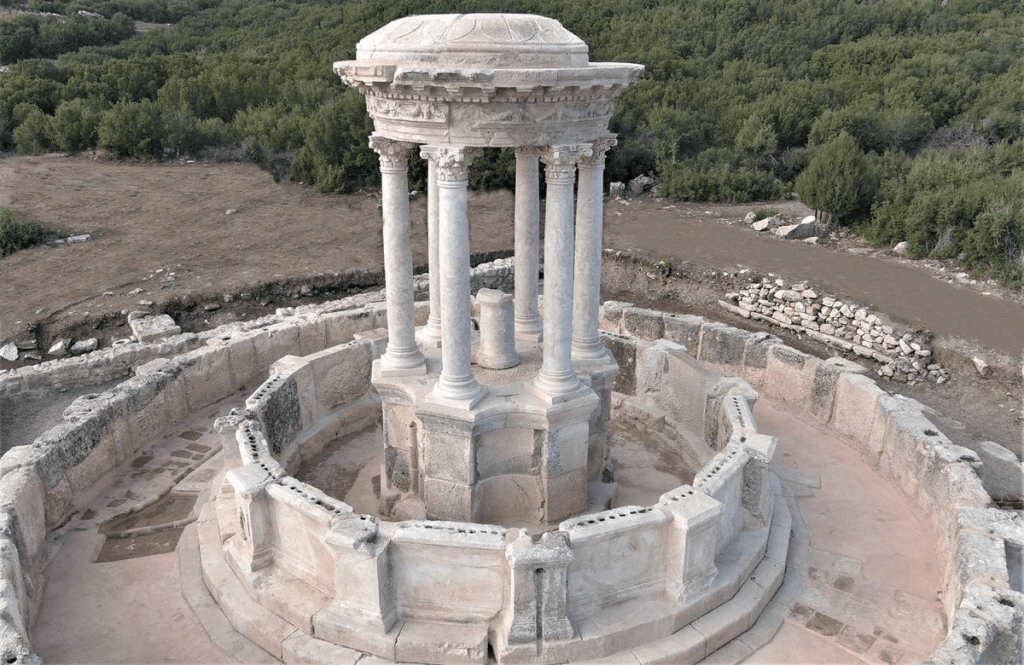
Anıtsal Çeşme / Monumental Fountain
Ulaşım / Transportation
Ulaşım konusu çok rahat. İster kendi aracınızla isterseniz de şehirler arası otobüs ile Gölhisar’a gelebilirsiniz. Burdur Merkez’den ve Fethiye’den ilçeler arası minibüsler de bulunuyor. Fakat ilçe merkezinden antik kentin olduğu yere gitmek için mutlaka araç şart. Çünkü yamaca kurulu olan kente yürüyerek gitmek zor olabilir.
The transportation issue is very comfortable. Whether you want to come to Gölhisar by your own car or by intercity bus, you can come to Gölhisar. There are also inter-district minibuses from Burdur Center and Fethiye. But a car is absolutely necessary to go from the district center to the place where the ancient city is. Because it can be difficult to walk to the city that is built on the hillside.
 Anadolu Arkeolojisi