

Stratonikeia, Muğla İli, Yatağan İlçesi’nin 7 km batısında, Eskihisar Mahallesi sınırları içinde yer almaktadır. Antik kent Yatağan-Milas yeni karayolunun kenarındadır.
Stratonikeia is located within the borders of Eskihisar District, 7 km west of Yatağan District of Muğla Province. The ancient city is on the side of the new Yatağan-Milas highway.
Stratonikeia, Karia Bölgesi’nde iç bölgelerin batı ve güneye bağlantısının sağlandığı ana yolların kavşağında, verimli Yatağan Ovası’nın batısında, Kadıkule Tepesi’nin kuzey yamacına kurulmuştur. Burada ilk bilimsel kazılar 1977 yılında Prof. Dr. Yusuf Boysal ile başlamış, daha sonra Prof. Dr. M. Çetin Şahin tarafından devam ettirilmiş ve günümüzde Prof. Dr. Bilal Söğüt başkanlığında devam etmektedir.
Stratonikeia was established on the northern slope of Kadıkule Hill, in the west of the fertile Yatağan Plain, at the junction of the main roads connecting the inner regions to the west and south in the Caria Region. The first scientific excavations here were carried out in 1977 by Prof. Dr. It started with Yusuf Boysal, then Prof. Dr. It was continued by M. Çetin Şahin and today Prof. Dr. It continues under the chairmanship of Bilal Söğüt.
Stratonikeia’nın Tarihi / History of Stratonikeia
Stratonikeia kent merkezinde yapılan kazı ve araştırmalarda, Bronz Çağı’ndan itibaren buluntu ele geçmiştir. Yerleşmenin adı sırasıyla; Hititler Dönemi’nde Atriya, Arkaik ve Klasik Dönemde Khrysaoris, Idrias ve Hekatesia, Hellenistik, Roma ve Doğu Roma (Bizans)Dönemi’nde Stratonikeia ve Hadrianoupolis, Beylikler Dönemi sonrasında ise Eskihisar olmuştur. Düzenli bir kent olarak Hippodomik planlanan yerleşim şekli Hellenistik ve Roma İmparatorluk Döneminde de aynı gelenekte devam etmiştir. Roma İmparatorluk Dönemi sonrasında yerleşim küçüldüğünden Doğu Roma Dönemi, Beylikler ve Osmanlı dönemlerinde ise kentin belirli bölümlerinde yerleşim olmuştur. Burası tarih boyunca depremlerden çok etkilenmiş ve her seferinde yeniden ayağa kaldırılmıştır.
In the excavations and researches carried out in the city center of Stratonikeia, finds were found from the Bronze Age. The name of the settlement is respectively; Atria in the Hittite Period, Khrysaoris, Idrias and Hekatesia in the Archaic and Classical Periods, Stratonikeia and Hadrianoupolis in the Hellenistic, Roman and Eastern Roman (Byzantine) Periods, and Eskihisar after the Principalities Period. As a regular city, the Hippodomic planned settlement continued in the same tradition in the Hellenistic and Roman Imperial Periods. Since the settlement shrank after the Roman Imperial Period, there were settlements in certain parts of the city during the Eastern Roman Period, Principalities and Ottoman periods. This place has been affected by earthquakes throughout history and has been rebuilt every time.

Antik yazarlardan Herodotos (V, 118), Strabon (XIV, II, 25), Pausanias (5, 21, 10) ve Bizanslı Stephanos (Ethnika, 696)’nın verdiği bilgilere göre, burada Khrysaoris / Idrias adında bir yerleşme vardı.
According to the information given by ancient writers Herodotos (V, 118), Strabo (XIV, II, 25), Pausanias (5, 21, 10) and Byzantine Stephanos (Ethnika, 696), there was a settlement named Khrysaoris / Idrias here.
Stratonikeia antik kentinin büyüklüğü yaklaşık 3600 m. uzunluğundaki sur duvarlarından kolayca anlaşılabilmektedir. Ancak kent içinde sadece belirli yapılarda kazılar yapılmıştır. Bu nedenle, kent bütünü genel anlamda bilinmekle birlikte, açığa çıkarılan yapı sayısı oldukça sınırlıdır. M.Ö. 281 yılından sonra, kısa bir süre içinde Seleukos kralı I. Antiokhos tarafından, önceden üvey annesi ve sonrasında eşi olan Stratonike adına bu kentin adı değiştirilmiştir. Stratonikeia ve içinde bulunduğu bölge, Hellenistik Dönem boyunca, Seleukos, Ptolemaios, Makedonyalılar, Rodos ve Roma arasında el değiştirmiştir. Roma İmparatorluk Dönemi boyunca hep önemini koruyan kent, devamlı bir gelişim ve imar faaliyeti içinde olmuştur. Erken İmparatorluk Dönemi ve M.S. 2. yy’daki yapılaşmadan en iyi şekilde yararlanmasını bilmiştir. Bizans Dönemi’nde Stratonikeia Piskoposluğu bölgedeki diğer kentler gibi Aphrodisias’a bağlıdır.
The size of the ancient city of Stratonikeia can be easily understood from the approximately 3600 meters long fortification walls. However, only certain buildings were excavated in the city. For this reason, although the whole city is known in general terms, the number of unearthed structures is quite limited. B.C. After 281, the name of this city was changed by the Seleucid king Antiochus I in a short time in the name of Stratonike, who was his stepmother and later his wife. Stratonikeia and the region it is in changed hands between Seleukos, Ptolemaios, Macedonians, Rhodes and Rome during the Hellenistic Period. The city, which has always maintained its importance throughout the Roman Imperial Period, has been in a continuous development and reconstruction activity. Early Imperial Period and A.D. In the Byzantine Period, the Diocese of Stratonikeia was attached to Aphrodisias like other cities in the region.
Stratonikeia’da görülecek yerler / Places to see on Stratonikeia
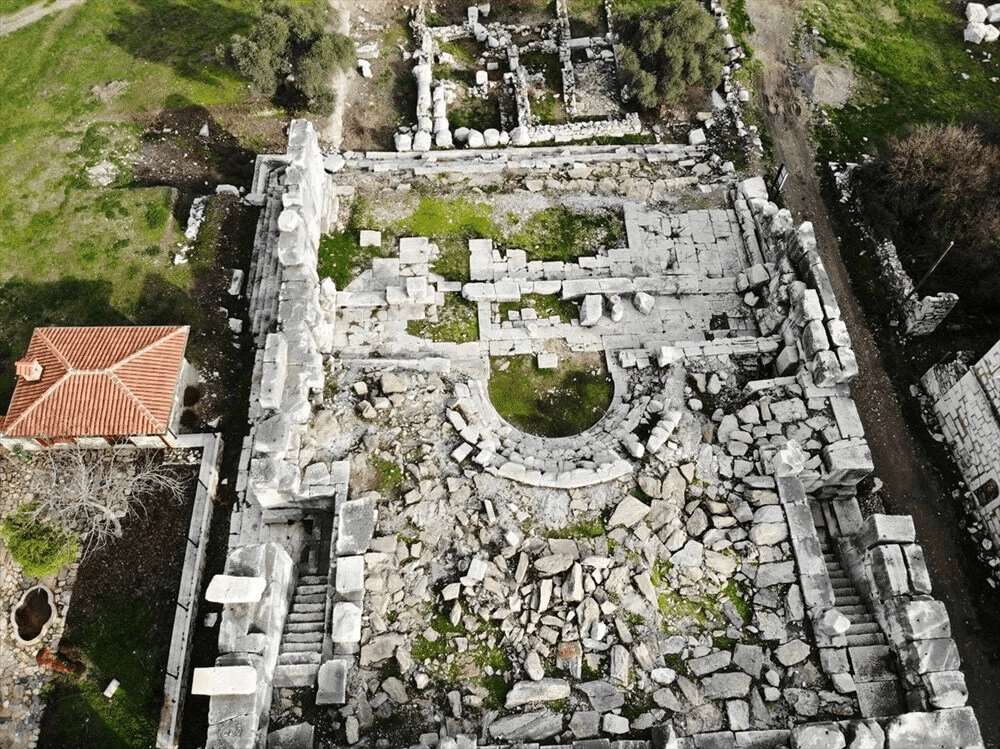
Antik kentin korunan kısımlarında, 2 Farklı Sur Duvarı, 1 Gymnasion, 1 Tiyatro, 2 Roma Hamamı, 2 Agora, 2 Roma Çeşmesi, 2 Anıtsal Şehir Kapısı, 1 Meclis Binası (Bouleuterion), 3 Tapınak, 2 Sütunlu Cadde, 3 Nekropol, 4 Kilise, 3 Köy Meydanı Kompleksi, 1 Beylikler Dönemi Hamamı(Selçuk hamamı), Şaban Ağa Camii, 3 Osmanlı Çeşmesi, Ağa Evleri (Abdullah ve Hadi Eskişar Evi-1876, Mehmet Eskişar Evi-1909, Hasan Şar Evi-1940) ve Osmanlı Dönemi’nden taş döşeli yollar bulunmaktadır.
In the protected parts of the ancient city, 2 Different Walls, 1 Gymnasion, 1 Theatre, 2 Roman Baths, 2 Agora, 2 Roman Fountains, 2 Monumental City Gates, 1 Assembly Building (Bouleuterion), 3 Temples, 2 Column Street, 3 Necropolis, 4 Church, 3 Village Square Complex, 1 Principalities Period Bath (Selçuk Bath), Şaban Ağa Mosque, 3 Ottoman Fountains, Ağa Houses (Abdullah and Hadi Eskişehir House-1876, Mehmet Eskişar House-1909, Hasan Şar House-1940) and stone-paved roads from Ottoman Period.
Tapınak 2 / Temple 2
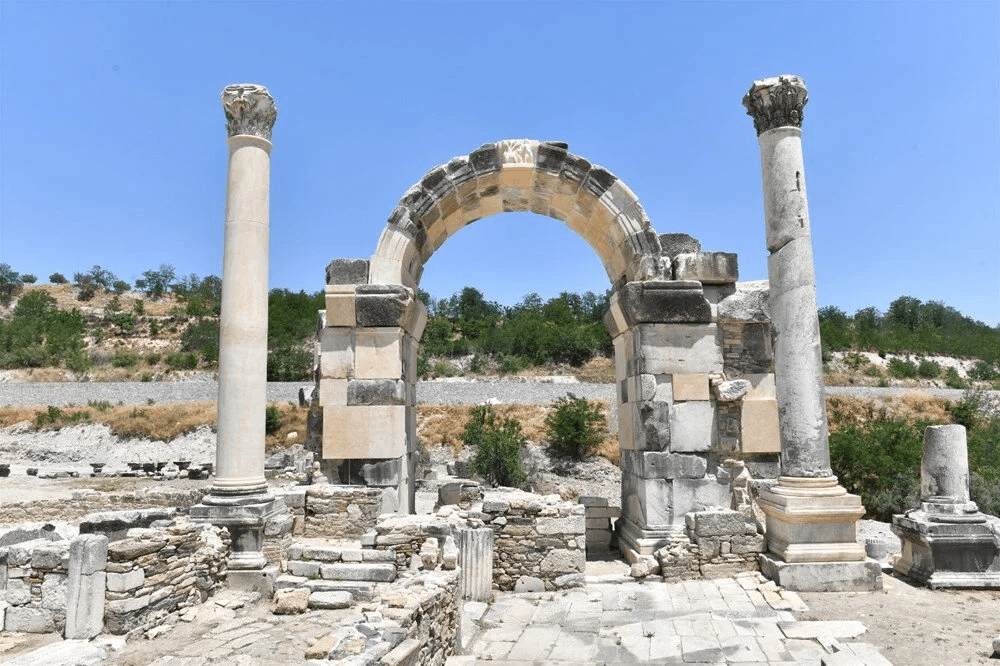
Antik Tiyatro / Ancient Theatre
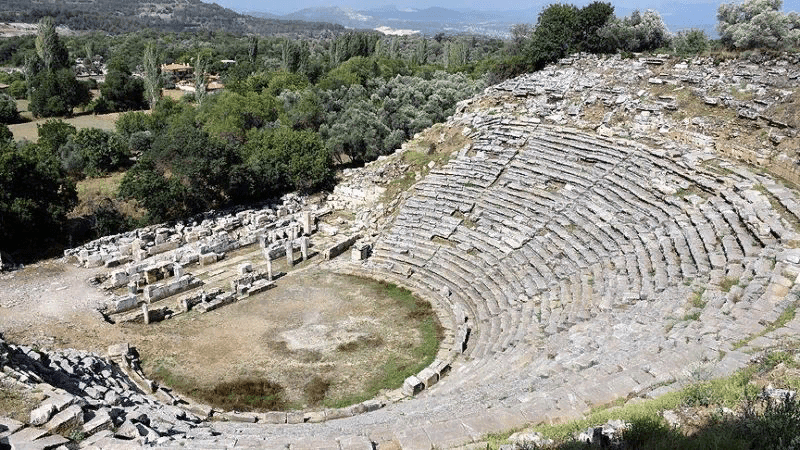
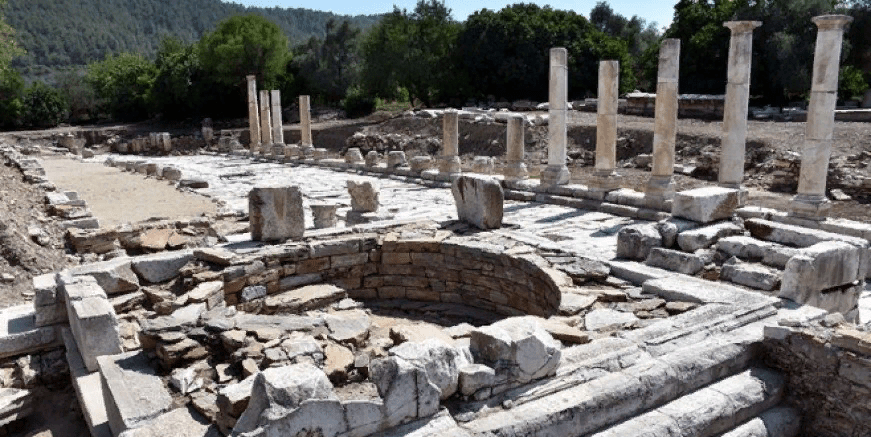
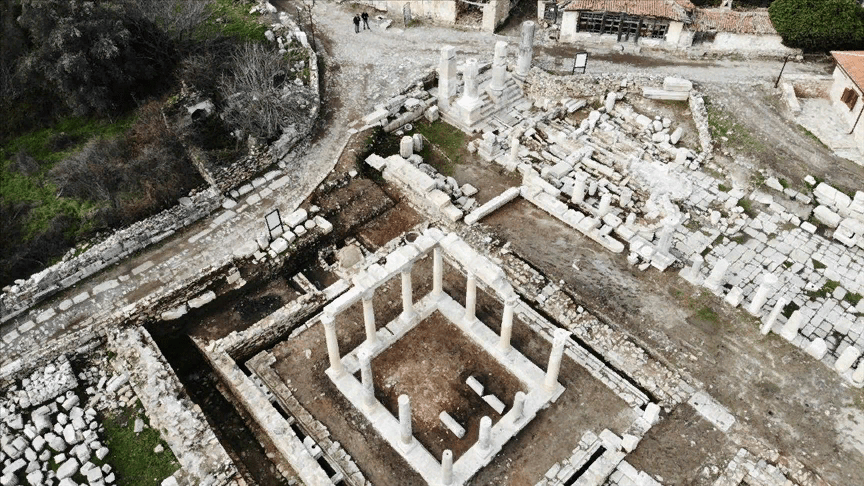
Mitolojik Maskeler / Mythological Masks

Bouleuterion (Meclis Binası) / Bouleuterion (Parliament Building)

Kalıntılardan da anlaşılacağı gibi Stratonikeia Antik Dönem ile Osmanlı ve Cumhuriyet Dönemi yapı ve kent dokusunun birlikte görülebileceği nadir yerlerden birisidir. Farklı dönemlere ait pek çok yapının iç içe olması, kenti gezecekler için bulunmaz bir fırsattır. Antik kentteki tarihi yapıların tamamı, Osmanlı Dönemi taş döşeli yollarda yürüyerek gezilebilmektedir. Stratonikeia’da farklı dönemlere ait tüm yapılar yazıtlarla kesin olarak tarihlenebilmektedir.
As can be understood from the ruins, Stratonikeia is one of the rare places where the structure and urban texture of the Ancient Period and the Ottoman and Republican Periods can be seen together. The fact that many buildings from different periods are intertwined is a unique opportunity for those who will visit the city. All of the historical buildings in the ancient city can be visited on foot on the stone-paved roads of the Ottoman Period. All buildings belonging to different periods in Stratonikeia can be dated definitively with inscriptions.
Ulaşım / Transportation
Stratonikeia Antik Kenti’ne girişler ücretsizdir. Bu antik kentin batısında tek başına bulunan kapı giriş kapısıdır. Muğla ve Bodrum yolu üzeri gidenler için Eskihisar Köyü üzerinden devam ettikten sonra yaklaşık 1 kilometrelik bir yol gittikten sonra bu antik kente ulaşım sağlayabilirsiniz.
Entrance to Stratonikeia Ancient City is free. The gate located alone in the west of this ancient city is the entrance gate. For those who go on the way to Muğla and Bodrum, after continuing through Eskihisar Village, you can reach this ancient city after traveling for about 1 kilometer.
 Anadolu Arkeolojisi
“Stratonikeia Antik Kenti / Stratonikeia Ancient City” üzerine bir yorum