

English version is below.
Her yıl binlerce kişinin ziyaret ettiği Adıyaman’daki Nemrut Dağı Milli Parkı’nda bulunan Arsemia Ören Yeri’ndeki tokalaşma steli, “asrın felaketi” olarak nitelenen depremleri hasarsız atlattı.
Kültür ve Turizm Bakanlığı yetkilileri, Helenistik dönem krallıklarından Kommagene’nin izlerini taşıyan Kahta ilçesindeki Nemrut Dağı Milli Parkı’nda bulunan Arsemia Ören Yeri’nde, 6 Şubat’taki depremlerin hasara neden olup olmadığına dair inceleme yapıyor.

Depremlerden önce turistlerin uğrak noktaları arasında yer alan, üzerinde Komagene Kralı Antiokhos ile Yunan mitolojisinin kahramanlarından Herakles’i tokalaşırken betimleyen kabartma bulunan yaklaşık 3 metre yüksekliğinde, 2 metre enindeki taş blokun (stel), depremlerde zarar görmediği tespit edildi.
Bölgedeki kaya mezarından bazı taşların depremler nedeniyle düştüğü kaydedildi.
Milli parkta bulunan Karakuş Tümülüsü’ndeki “tokalaşma sütunu” ise depremlerde yıkılmıştı.
Bakanlık yetkililerinin bölgedeki incelemesi sürüyor.

“Sevgi dünyayı kurtarmış”
Bakanlık yetkililerine eşlik eden Kahta Kaymakamlığı Kriz Yönetim Merkezi gönüllülerinden Ramazan Tümsavaş, AA muhabirine, tokalaşma stelinin depremde zarar görmemesinin sevindirici olduğunu belirtti.
Stelin dimdik ayakta durduğunu belirten Tümsavaş, “Kaya mezarının etrafından ufak tefek taşlar düşmüş ama stelde bir sıkıntı yok. Düşmemiş, kırılmamış yani dimdik ayakta. Sevgi dünyayı kurtarmış.” ifadelerini kullandı.
Tokalaşma steli
Stele ilişkin bilgilendirme panosunda şu bilgiler yer alıyor:
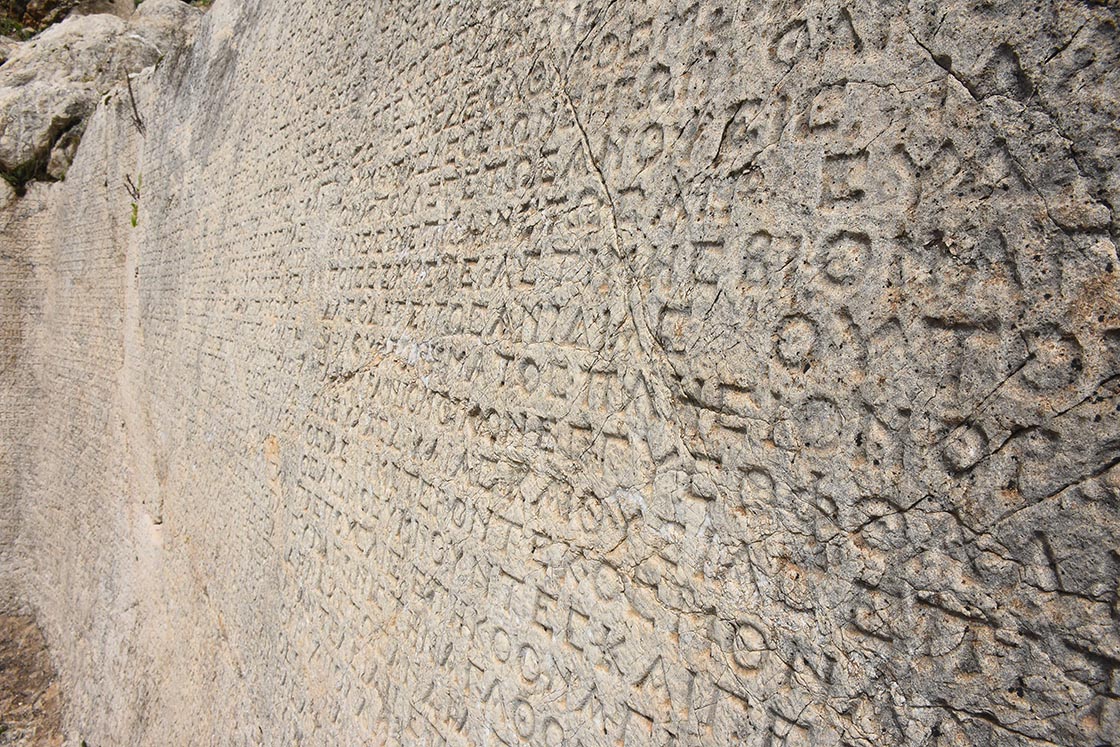
“1953 yılında keşfedilen bu tokalaşma stelinde 1. Antiokhos, yarı tanrı Herakles tarafından selamlanmaktadır. Kral, burada çıplak haldeki Yunan tanrısı Herakles ile tezat oluşturacak şekilde Pers giysileriyle betimlenmişti. Kaya yüzeyinde yazılmış kült yazıtında Asrameia’nın tarihi, topografyası, imar faaliyetleriyle 1. Antiokhos ve babası 1. Mithridates’in onuruna yapılacak tören ayrıntılarından bahsedilmektedir. Yazıtın altında yer alan 158 metre uzunluğundaki tünelin bir su kaynağı kuyusu, tamamlanamamış bir kaçış tüneli ve kült amaçlı inşa edilmiş bir yapı olduğu düşünülmektedir.”
Kaynak: AA
The handshake stele at the Arsemia Ruins in the Mount Nemrut National Park in Adıyaman, which is visited by thousands of people every year, survived the earthquakes described as the “disaster of the century” without damage.
Officials of the Ministry of Culture and Tourism are investigating whether the earthquakes on 6 February caused damage in the Arsemia Ruins, located in the Nemrut Mountain National Park in Kahta district, which bears the traces of Commagene, one of the Hellenistic period kingdoms.
It has been determined that the stone block (stele), which is about 3 meters high and 2 meters wide, was not damaged in the earthquakes, which was among the frequent destinations of tourists before the earthquakes, on which there was a relief depicting the Komagene King Antiochus and the heroes of Greek mythology Heracles shaking hands.
It was noted that some stones from the rock tomb in the region fell due to earthquakes.
The “handshake column” in the Karakuş Tumulus in the national park was destroyed in the earthquakes.
Ministry officials continue to investigate the region.
“Love saved the world”
Ramazan Tümsavaş, one of the volunteers of the Kahta District Governorship Crisis Management Center, who accompanied the ministry officials, stated to the AA correspondent that it was gratifying that the handshaking stele was not damaged in the earthquake.
Stating that the stele is standing upright, Tümsavaş said, “Small stones have fallen around the rock tomb, but there is no problem with the stele. It has not fallen or broken, so it is standing upright. Love saved the world.” used the phrases.
handshake stele
The information board about the stele contains the following information:
“In this handshake stele discovered in 1953, Antiochus I is saluted by the demigod Heracles. The king was depicted in Persian clothes in contrast with the naked Greek god Heracles. In the cult inscription written on the rock surface, Antiochus I, with its history, topography and reconstruction activities. and his father Mithridates I. The details of the ceremony are mentioned. The 158-meter-long tunnel under the inscription is thought to be a water supply well, an unfinished escape tunnel, and a cult building.”
 Anadolu Arkeolojisi